Pages

Showing posts with label Instructional. Show all posts

Thursday, May 7, 2015

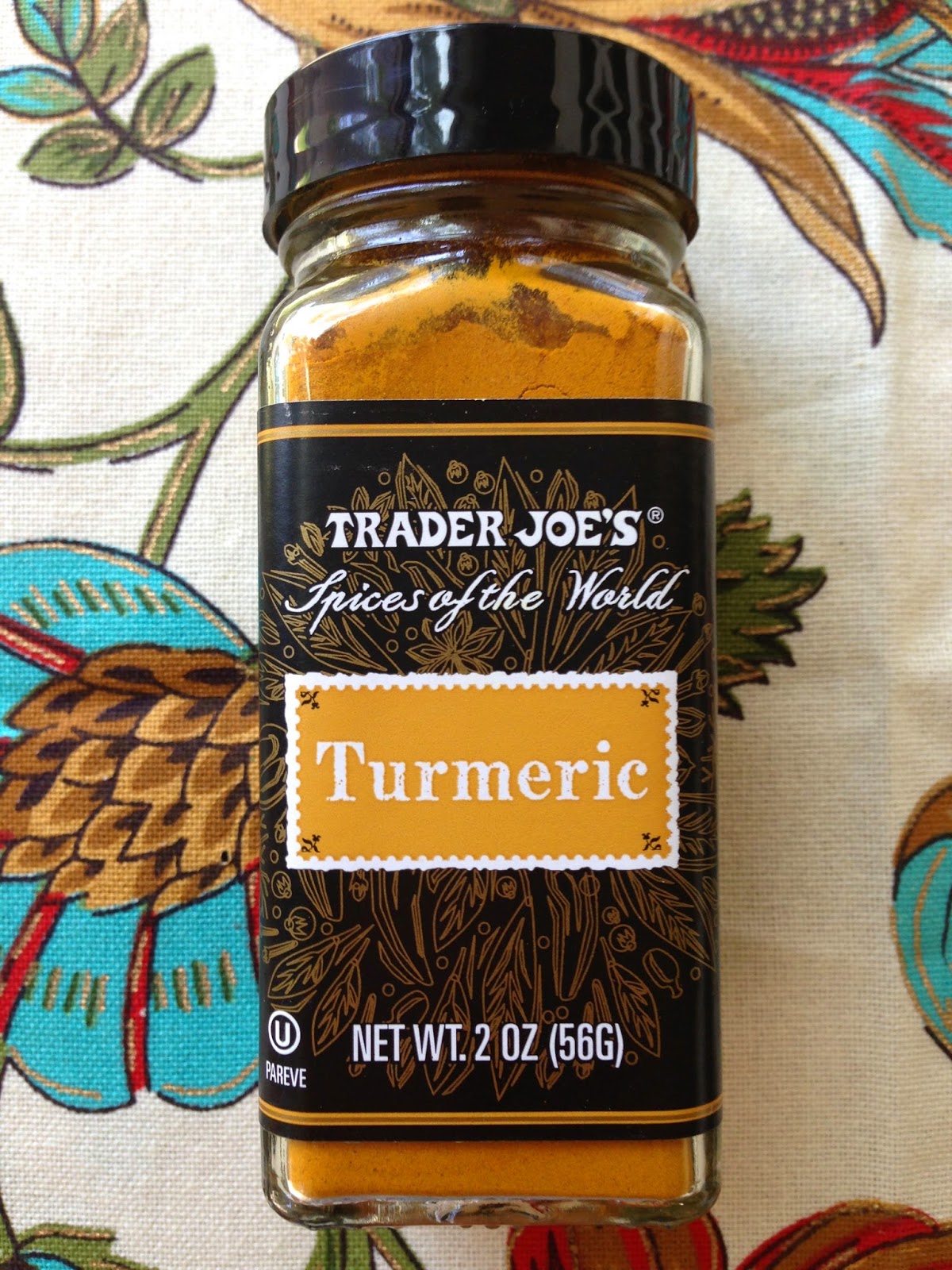
Spotlight on Spice: Turmeric


About a week ago I wrapped up one of this semester's classes toward my associate's in Nutrition: Research in Complementary and Alternative Nutrition Therapies. Not gonna lie, it was not an awesome class and unfortunately I did not learn as much as I had hoped about this up-and-coming field. (Lots of emphasis on the Scientific Method, which I believe was covered sufficiently in my 8th grade science class.) Still, one piece of real learning took place in writing the final for the course, a short research paper on a commonly used dietary supplement. There are of course thousands of these food-like substances to choose from--just stroll down the supplement aisle at Whole Foods--but I decided to write my paper on turmeric, having heard rumors of its anti-inflammatory properties. Since I have several friends and family members who suffer from inflammatory autoimmune diseases, I have been curious to sort fact from fiction regarding this particular spice. The research process was an enlightening one, so I thought I would share a bit of what I learned here on the blog. Turmeric is, after all, a food--and a delicious one at that!

For a little background: turmeric is a rhizomatic herbaceous relative of ginger and has been used for centuries in a variety of medicinal capacities. Native to East Asia, the turmeric plant is typically ground to a rust-colored powder known for lending its warm, slightly bitter taste to many Indian dishes. Its healing use dates back nearly 4,000 years in Chinese and Ayurvedic medicine. Marco Polo first described the spice in 1280, but mainstream Western interest in its healing powers has arisen only relatively recently, correlating with the increase in popularity of herbal supplementation.

One interesting fact about turmeric is that it contains a compound called curcumin, which can be extracted and is sold as its own separate dietary supplement. Curcumin is the "active ingredient" in turmeric, giving the spice its many purported medicinal functions. However, since bioavailability of curcumin is generally low and can be aided by black pepper, it is believed to be most beneficial to ingest turmeric as a spice in food also containing black pepper, or in a supplement packaged with black pepper. Fortunately for those of us who like Indian cooking, most Indian dishes that use turmeric (which is a LOT) also call for black pepper. Makes you think the Indians are on to something, what with that 4,000 year history...

The healing effects, both genuine and purported, of turmeric are numerous and diverse. Maladies treated with turmeric throughout history and at present include rheumatoid arthritis, asthma, digestive conditions, diabetes, wound healing, chicken pox, jaundice, inflammation, menstrual problems, cancer, and Alzheimer’s disease. This list is by no means exhaustive. If you can name a medical problem, you can probably find someone out there who believes turmeric can help it. So what does the evidence show? Is this sunny spice a cure-all or another over-hyped placebo?

The research—and there is quite a lot of it—surrounding medicinal uses of turmeric is somewhat conflicting. The National Center for Complementary and Integrative Health states that “there is little reliable evidence to support the use of turmeric for any health condition” because of the lack of clinical trials and testing on human subjects. This skeptical outlook may be overly cautious, though, since numerous peer-reviewed studies have appeared in recent years showing evidence of effective treatments using turmeric. For example:

  •  A study published just this month reveals that curcumin complements the action of DHA on the brain, enhancing its synthesis and leading to anxiety prevention
  • Another study determined turmeric supplementation to be an effective therapy for maintaining remission in ulcerative colitis.
  • Yet another recent study found that type 2 diabetes patients who received turmeric supplements in addition to their oral medication experienced marked decreases in fasting blood sugar compared to a control group. 
  • Turmeric has been shown to work as well as NSAID pain medications for treating osteoarthritis of the knee. Over two dozen anti-inflammatory compounds within the spice work to block the COX-2 enzyme, which promotes pain, swelling, and inflammation. 
  • Over 50 studies have addressed turmeric's effects on Alzheimer's disease, indicating that it contains agents that can block the substance that produces plaque on the brain. Quite likely, this explains why elderly villagers in India who consume turmeric in sizable quantities have the lowest rates of Alzheimer's in the world.

Without a doubt, this list does not cover all the research into the benefits of including turmeric in your diet, but even if the uses listed above were its only advantages, I'd still say it's a golden powerhouse of a spice. I'm happy to find ways to incorporate it more frequently into my cooking. Look for a turmeric-spiced red lentils recipe coming in my next post! And if you're interested in recommendations for using turmeric as a supplement, ask your doctor--or check out Dr. Andrew Weil's recommendations here. (Though I should probably say, so no one sues me, this post is not intended to be medical advice.) I won't be surprised if, as research continues, turmeric becomes accepted into the usage canon of mainstream medical practice. What a wonderful example of food's potential power in our bodies for health and healing!

Monday, September 29, 2014

6 Things You Didn't Know About Fat


There are various ways to look at the word "fat." Most of us think of the word with pejorative overtones, something we don't want applied to us. The adjectives aren't pretty and evoke feelings of playground humiliation: chubby, flabby, plump, chunky, pudgy. Then of course you could think of "fat" like that fat check you got when you finally sold your Van Halen live-in-concert VHS collection on Craigslist. And don't even get me started on "phat" (mostly because, even as a child of the '90s, I still don't think I get it.) But there's another set of terms I want to talk about today. Terms like lipid, adipose, triglyceride, sterol, fatty acid. These describe the other kind of fat, the macronutrient every human being requires to sustain life. There are so many fascinating aspects to dietary fat and the way our bodies use it, and quite possibly a lot you didn't know.

As I've progressed in my coursework toward becoming a Dietetic Technician, I've come to understand so much of what always seemed confusing about fat nomenclature. Since I've learned how to navigate the different kinds of fat (like that mental image?) I thought I'd share some of the information I've found interesting and helpful.

1. Let's start with an cool trivia point: what's the fattest organ in your body? Your brain! About 60% of your brain's matter is fat. So if someone calls you a "fathead," you can be proud to know you're perfectly normal. (And they're a fathead, too. Obviously.)

2. Fat provides 9 calories per gram (whereas carbs and protein provide 4). This is true across the board for any fat. That's why, even though nutrition labels list number of calories from fat in a food, you can always calculate it yourself by multiplying the grams of fat by 9.

3. What's the difference between saturated and unsaturated fats? You probably know they must be related because they have that word "saturated" in common. To understand the difference between these types of fat, you have to understand what "saturated" means. Fat is made up of carbon chains. In saturated fat, all of the available carbons in the chain are bonded with hydrogen...kind of like how I always felt at junior high dances when all the cute boys immediately paired up with the popular girls. All the carbons are taken, paired off, saturated. In unsaturated fats, however, there's a break in the music, a chance for a different kind of bond. Instead of all the carbons being taken up by hydrogen, something called a double bond occurs, which, instead of bonding a carbon to hydrogen, bonds carbon to another carbon, leaving it not entirely saturated...in other words, unsaturated. And the only difference between a monounsaturated fat and a polyunsaturated fat is that a mono has only one of these breaks, whereas a poly has two or more.

4. Now that you know the difference between saturated and unsaturated fat, it probably makes sense why saturated fat is generally solid at room temperature. Everything is paired off and packed in, making it denser. On the other hand, unsaturated fats (like oils) are generally liquid at room temperature for the opposite reason.    

5. What about trans fats? What are they and why are they so scary? Somewhere along the line, scientists realized that they could mess with the chemical structure of unsaturated fats (i.e. oils) by plopping in some extra hydrogen where it didn't really belong to create what are called trans fats. The process of unnaturally adding hydrogen is known as hydrogenation. So when you see the word "hydrogenated" on an ingredient list, you know the food contains some amount of trans fat, even if the label says 0 grams trans fat. (The FDA allows foods with .5 grams or less per serving to round down to zero.) Research has yet to show exactly why trans fats have a negative effect on health, but they have definitively been linked to coronary heart disease and several other conditions you don't want to get.

6. One last kind of fat you hear a lot about is Omega 3s. The reason these unsaturated fats have this name is simply due to the spot where they have their carbon-to-carbon bond: on the third carbon from the end. Bet you can guess where Omega-6 and Omega-9 have theirs now, too. 

Okay, that was kind of a lot of chemistry. I should probably stop now. But I have so many more things I want to tell you about fat! I'll be hoarding up my fat facts for another post soon, focusing on fat's effects in your body. And if you're still hungry for macronutrient info, you can head over to my carbohydrate facts page!

Friday, August 22, 2014

6 Baking Substitutions That Will Make Your Life Easier

Now, which of you will we replace?
Speaking as a home baker, substitutions in recipes are my very, very good friend, and if you bake, too, I'll wager you feel the same way. Whether born of an "oh, crap" moment of realization you're out of an ingredient, or just the desire to bake something a little fancier without having to sign your first-born child away at a specialty foods store, you can always do with the extra kitchen acumen of knowing what can replace what. With a little ingredient do-si-do, you might be surprised what greatness can spring from your mixing bowl. With that in mind, here's a list of some of my favorite quick and easy ingredient substitutions for baking.

1. Cake flour: When I first graduated from making box-mix cakes to fully homemade cakes, I knew I had to avoid recipes with one ingredient: cake flour. I had seen those $7 "Softasilk" boxes on my grocery store shelf (you know, the one with the box design that makes it look like no one has purchased it since 1978?) 


Am I wrong? Does this not look straight out of the '70s?
and had made the conscious decision not to spend that kind of money on approximately four cups of flour. Then along came the Internet to teach me that making cake flour is ridiculously simple and the Softasilk people have a total racket going on. Here's how:

For one cup of cake flour, measure one cup all-purpose flour, then remove two Tablespoons. Replace the two Tablespoons with two Tablespoons corn starch. Mix well.

2. Superfine sugar: Like cake flour, I can't tell you how many recipes I avoided making because they contained superfine sugar. I didn't know what it was, but I was pretty sure it was going to be expensive, too. It may, in fact, be expensive--I still don't know; I've never purchased it. Because come to find out, all it takes is regular sugar and a food processor:

Place the desired amount of superfine sugar in your food processor with a couple of extra tablespoons to account for reduction in volume; process 1-2 minutes until it feels--you guessed it--super fine, like sand.

3. Half-and-Half: Did you ever wonder what half-and-half is half and half of? It's half milk and half cream. Therefore, it's extremely simple to replace by subbing:

1:1 measures of heavy cream and milk (I'd recommend 2%), i.e. 1/2 c. cream + 1/2 c. milk = 1 c. half-and-half.

4. Buttermilk: Buttermilk is a great ingredient for adding richness to breads, pancakes, and desserts. The only problem is figuring out what to do with the rest of that large, perishable carton of buttermilk after the weekend has passed and the pancakes are gone. You have a few options for substituting:

To make 1 c. buttermilk, measure 1 c. milk, then remove 1 Tablespoon. Replace with 1 Tablespoon lemon juice or white vinegar. Let stand at room temperature for 5-10 minutes until curdled.

OR

To make 1 c. of a buttermilk substitute, mix 3/4 c. plain yogurt or sour cream with 1/4 c. milk.

5. Butter/Vegetable Oil: I'd be a fool to say anything can really take the place of butter, but I do frequently want to make my baked goods a bit healthier (though I'm not about to tell you to replace butter with mashed avocado, as I've seen on several blogs. Let's be real here, people.). Even in a rich cake, I've found you can get away with substituting up to half of the butter and/or oil content with unsweetened applesauce. I recently did this in a dark chocolate raspberry layer cake and even I would never have guessed it from the taste. Therefore, if you're actually out of butter, you can:

Mix 1/2 c. unsweetened applesauce with 1/2 c. vegetable oil for 1 c. butter.

OR

To decrease fat content, replace 1/2 of the butter with unsweetened applesauce.

6. Unsweetened Baking Chocolate/Cocoa Powder: I had to roll my eyes the time I was looking for a cocoa powder substitute and found a site that recommended subbing 1 Tbsp. Dutch-process cocoa powder for regular cocoa powder. Like, yeah, I think I would have figured that one out. If you actually are out of one or the other, though, here's a conversion that works great:

For 1 ounce of unsweetened baking chocolate, use 3 Tbsp. cocoa powder plus 1 Tbsp. softened butter or vegetable oil.

Lastly, one bit of interesting trivia about why the famous baking powder brand pictured above is called Clabber Girl. To "clabber" means to sour, as in soured milk. In the olden days, soured milk was made by leaving milk out at room temperature, to be used as a leavener in baked goods--until 1854, when baking powder was invented. So I guess the Clabber Girl is sparing you the work of actually clabbering, which would take days of waiting for the milk to get sour enough. Thanks, Clabber Girl! Keep on clabbering! Clabber clabber clabber! (Can you tell I really like the word "clabber"?)

At any rate, it's my sincere hope that this list may keep you from spending extra money on ingredients you don't need, or running out to the store in your pajamas at 10 PM for some cake flour. Happy baking!

Wednesday, June 18, 2014

Homemade Tomato Sauce Tutorial

Back in February, I mentioned how many tomatoes were growing packed into our garden bed like so many Japanese bullet train passengers. As a near-native desert dweller, I'm just impressed when anything edible grows out of the ground, but tomatoes are especially great to have handy, as they're usable in so many dishes. For months they served us well in salads, tarts, pizzas, and sandwiches, but the day finally came when my husband said we needed to harvest the whole bed. (I wouldn't know why. He's the gardener. Probably it had something to do with the face-melting heat outside.) So out he went and returned with a heaping colander of 'maters of all different shapes, sizes, and hues.


If there's anything I've learned from gardening--or, more accurately, being the beneficiary of my husband's gardening--it's that the work comes both before and after the harvest. Tomatoes picked singly off the vine are a delightful convenience. Three hundred tomatoes sitting on your counter feel like a ticking time bomb of spoilage. Still, the work both before and after your produce is well worth it--not necessarily because it's cheaper or easier than buying from the store, but because it's a reconnection to the Earth, a reminder that all food comes at a cost of labor and love. And because food made from fresh fruits and vegetables is delicious!

With dozens of (mostly tiny) tomatoes now in my kitchen, silently begging the question "What are you going to do with us?" I knew I had to come up with something. Having never made my own from-scratch tomato pasta sauce, that seemed like an attractive option--made all the more attractive by the fact that I already had all the ingredients necessary! And I must say, it turned out INCREDIBLE. The flavor was so much richer and deeper than anything I've ever had out of a store-bought jar, probably due to the red wine, the fresh herbs, and of course, the garden-fresh tomatoes. My husband ate it on tortilla chips so he could have it as a snack. 

So if you, too, have a glut of tomatoes from your garden or just want to try a better-than-store-bought taste experience, here's a how-to for making your very own sauce for spaghetti, tortellini, meatballs, or any other creative choices (like tortilla chips).

Homemade Tomato Sauce
(Adapted from Allrecipes.com)

Ingredients:

5 lbs. fresh tomatoes (10 large, 40 plum, or 100ish cherry tomatoes)
2 Tbsp. olive oil
2 Tbsp. butter
1 onion, chopped
2 carrots, chopped
4 cloves garlic, minced
1/4 c. chopped fresh herbs (a mix of rosemary, basil, and thyme is ideal)
1/4 tsp. Italian seasoning
1/4 c. red wine
1 bay leaf
2 stalks celery
2 Tbsp. tomato paste

Directions:

1. Boil and peel tomatoes.
Bring a large pot of water to a boil. Have ready a large bowl of ice water.  If using large or plum tomatoes, use a sharp knife to score the top or bottom of each with a small "X" to make peeling easier. Place tomatoes into boiling water until skins start to peel. Depending on your tomatoes' ripeness, this may take as little as 1 minute or as much as 3-4 minutes.


Remove with a slotted spoon and place in the prepared bowl of ice water.


The skins will begin to loosen and look like little Pacmans:


Let tomatoes rest until cool enough to peel. Once they are cool to the touch, peel and set aside. (The skins should slip off easily.)


Let's pause for a moment to honor the many tomatoes who gave their skins for this sauce.

2. Puree peeled tomatoes in a food processor or blender.


3. Make the rest of the sauce:
Rinse the pot you used to boil the tomatoes. Heat oil and butter over medium heat in this pot and cook onion, carrots, and garlic until onion starts to soften, about 5 minutes. 


Add pureed tomatoes, fresh herbs, Italian seasoning, and wine. Place bay leaf and whole celery sticks into the pot.


Bring to a boil, then reduce heat to low. Cover and simmer 1 hour. Stir in tomato paste and simmer another 30 minutes. Discard bay leaf and celery sticks. Serve immediately or store in an airtight container in the refrigerator.


Sunday, June 8, 2014

"Top 40" Exercise Playlist


So, obviously, this is a blog about food. From its title, that's probably pretty clear. But sometimes it's nice to jaunt off on a little side trail that has something to do with another area of interest frequently paired with diet--like, ohhh, let's say exercise. To maintain good health, I try to exercise regularly, usually by doing yoga, running, or dancing around my living room like a Britney Spears backup dancer slash insane asylum escapee. Each of these activities is enjoyable in and of themselves, but I would be LOST were it not for the music that accompanies them. In fact, one of the main reasons I look forward to exercise is that, as a music lover, it's my chance to physically jam out all the feelings music evokes. (Which is why I highly recommend getting a treadmill in your garage so you can bring out some Beyonce dance arms while you run. Much less embarrassing to do in your garage than at the gym...not that I would know... Also in your garage you can run in mismatched Halloween socks and your rattiest tank top from high school. Again, not that I would know...) 

I'm always on the hunt for great music to work out to--the stuff that gets me singing along loud and busting my best moves. (Like "The Badger." Available upon request.) The search for body-rocking, soul-jiving workout music must not be uncommon, either, as I frequently see Facebook friends post asking for the same thing. Since replying in their comment thread with a 40-song playlist would probably come off as a bit excessive, I'll just post it here. Below are:

--24 songs to majorly rock out to (hardest phase of your workout)
--9 songs for medium speed (like a comfortable jog)
--6 songs that are low-key enough to warm up with but still definitely get you moving.

As far as I know, these are all available on Spotify. I hope they get you grooving like they do for me! Happy exercising!

Serious Jam Playlist (Intense Workout)

1. Hey Ya! by OutKast. 
Probably the best workout song of all time.

2. Don't Stop by Foster the People. 
Listen to The People! Don't stop!

3. Can't Stop Running by Todd Rundgren.
No better song to keep you running.

4. Girl by Beck.
Beck sounds like he uses a Random Lyrics Generator, but hey, the music's fun!

5. Shake Me Like a Monkey by Dave Matthews Band.
Killer song for cardio.

6. Djobi, Djoba by the Gipsy Kings.
Cho-kee-cho-bee, cho-kee-cho-ba!

7. Hummingbird Heartbeat by Katy Perry.
If I were stranded on a desert island with only one artist to work out to, I'd choose Katy Perry every time.

8. Waking Up in Vegas by Katy Perry.
Not that that would ever happen.

9. Birthday by Katy Perry.
But if it did, totally Katy Perry. 

10. Video Killed the Radio Star by The Presidents of the United States of America.
Anyone else associate this song with the soundtrack to The Wedding Singer?

11. Classic by MKTO.
Not to be confused with Vlasic by PIKL.

12. Home Run by Geoff Moore and the Distance.
Digging deep on this one, a CCM song from 1995. Cheesy but a lot of fun.

13. What I Like About You by The Romantics.
Uhhhh-huh! Hey!

14. Love Letter to Japan by The Bird and the Bee.
A lively introduction to The Bird and the Bee, if you don't know their stuff.

15. Canadian Idiot by Weird Al.
You'd be surprised how many of Weird Al's songs are compulsively danceable.

16. Hit Me by Dirty Loops.
This Swedish band is a-ma-zing. Look them up.

17. Here It Goes Again by OK Go.
Remember their famous treadmill video? It's a sign that you should get on the treadmill to this song.

18. Crazy in Love by Beyonce and Jay Z.
If these two can't make you dance, you are made of stone.

19. Good by Better Than Ezra.
Classic '90s jam.

20. I Love It by Icona Pop.
There's a clean version available on Spotify, FYI. Where she's a "90's chic," not a "90's you-know-what."

21. You Make My Dreams by Hall & Oates.
A great feel-good song that has held up over time.

22. Tonight, Tonight by Hot Chelle Rae.
I don't know who the heck these guys are, but "there's a party on the rooftop, top of the world."

23. Out in the Twilight by Tally Hall.
Tally Hall has got to be the most talented, least appreciated band I know of.

24. Call It What You Want by Foster the People.
Another Foster the People one to round out the list.

Medium Jam:

26. My Name is Jonas by Weezer.
Weezer is a must for any workout playlist. Too bad none of their songs are longer than two minutes.

27. Girls Chase Boys by Ingrid Michaelson.
Get to see her in concert later this month--super excited!

28. What Is Life by George Harrison.
A beast of a moustache was not the only thing The Quiet Beatle could pull off. The man could also jam.

29. Every Heartbeat by Amy Grant.
This is still a really fun song, provided you can get over the 1991 drum sound.

30. I Want You Back by the Jackson 5.
For some reason, this section of the playlist has a lot of '70s stuff...

31. I Know What I Know by Paul Simon.
See above. Also, as an aside, I once had this song in my head for ten days straight.

32. Feelin' All Right by Joe Cocker.
Okay, end of the '70s streak! (Though it was probably the best decade for music in the 20th century, just sayin'.)

33. Rock and Roll by Eric Hutchinson.
A boppy, poppy little tune.

34. Ready to Run by the Dixie Chicks
Especially good to run to, for obvious reasons.

35. Party in the CIA by Weird Al.
Remember what I said about Weird Al?

Low-Key Jam:

36. Weight of the World by Chantal Kreviazuk.
Love this song for its free-and-happy feel.

37. Five O'Clock World by The Vogues.
Also known as the theme song for The Drew Carey Show.

38. Inside and Out by Feist.
Probably listened to this song 70+ times since getting this album for Christmas.

39. The House That Jack Built by Aretha Franklin.
Had to include a little Queen of Soul.

40. Eyes on the Prize by Sara Groves.
A song about keepin' on keepin' on.

41. Wake Me Up Before You Go-Go by Pomplamoose.
Super fun cover of Wham!'s 1984 hit. 

Whoops, how did we get to 41? Guess I threw in a freebie. Anyway, for next time, back to your regularly scheduled program: FOOD!

Thursday, June 5, 2014

4 Condiments You Didn't Know You Could (Easily) Make Yourself

Many moons ago when I was in college, I somehow got recruited to help out with the production of the Senior Class Film. (At Wheaton College, where I went to school, every class made a film each year...some better than others...most better than this one.) I remember being really eager to be a big part of the production--after all, this was film we were talking about. Stardom! Fame! Playing to an audience of 2,000 who would promptly forget your class's really bad movie! Yeah, it sounded awesome. In the end, though, I made no appearance in the film and for some reason the only thing I was called upon to contribute was a batch of fake blood. 

What self-respecting college student wouldn't take a picture like this after making fake blood?
What stood out to me about making fake blood was how easy it was. Surprisingly easy...sinisterly, wickedly easy. The only ingredients were water, corn syrup, food coloring, and corn starch. You don't even have to go to the store to make blood! 

Years later, as I became an adult trying to whip up meals for my family instead of bowls of fake blood for a class film, I realized a similar truth about condiments--those flavorful accompaniments that meals so much more enjoyable. Most condiments are made of very basic ingredients, meaning that when you run out of the pre-purchased kind, they aren't usually too hard to throw together with things you already have on hand. Additional bonus: if you don't like added sugars/chemicals/preservatives in your food, making your own condiments makes you the chef calling the shots.


Some condiments are, of course, more complicated than others. I've made teriyaki sauce from scratch and it was a paaaaaiiin. (Though it tasted fantastic.) So I thought I'd share four common condiments that are super simple to make from ingredients you probably have on hand--and taste a whole lot better than the store-bought version.

Ketchup


Since we just talked about fake blood, let's start with ketchup, shall we? If you've never had homemade ketchup, you're missing out. I made this not long ago when to accompany meatloaf and was amazed at how much more flavorful ketchup can be when you make it yourself and add your own mixture of spices. Since it uses tomato paste as its base, here's a tip that has saved me many a can of wasted tomato paste: if you can't use a whole can, freeze the remainder in 1-Tablespoon portions. So easy to pull out of the freezer when you just need that little bit!

Look at the baby tomato paste plops!
Ketchup
(Adapted from Allrecipes.com)

Ingredients:

1 6-oz. can tomato sauce
2 Tbsp. white vinegar
1/4 c. brown sugar
1 tsp. garlic powder
1 tsp. onion powder
1/4 tsp. allspice
1 tsp. salt
1 Tbsp. corn syrup
3/4 c. water

Directions:

Combine all ingredients in a small saucepan over low heat. Simmer gently until you get the consistency of ketchup, 5-10 minutes.

Makes 1 1/2 cups.


Tartar Sauce


I don't know about you, but I don't recall ever getting through an entire jar of tartar sauce before its expiration date. Mixing it up in a single-serving quantity is now my modus tartarus sauce-i. Fresher, tastier, and all-around better!

Tartar Sauce
(From Allrecipes.com)

Ingredients:

1 c. mayonnaise
1 Tbsp. sweet pickle relish
1 Tbsp. minced onion (or 3/4 tsp. onion powder)
2 Tbsp. lemon juice
salt and pepper

Directions:

In a small bowl, mix together mayo, pickle relish, and minced onion. Stir in lemon juice and season to taste with salt and pepper.

Makes 1 cup.


Chocolate Syrup


Here's an interesting blog post about the ingredients in Hershey's chocolate syrup. If you get to the bottom of what Hershey's and other companies put in their chocolate syrup, you're kind of ruined for ever wanting to purchase it again. When I think of stirring chocolate syrup into my milkshake or drizzling it over ice cream, I for one am not thinking Mmmmm....Polysorbate 60. I'm thinking of cocoa powder, sugar, and vanilla, which is what this homemade version contains. It's definitely thinner than the commercial version, which may take some getting used to, but it sweetens and chocolifies just as well (and you can keep thickening it with corn starch).

Chocolate Syrup
(Adapted from Allrecipes.com)

Ingredients:

scant 3/4 c. water
3/4 c. white sugar
1/2 c. cocoa powder
dash salt
1/2 tsp. vanilla extract
2 Tbsp. corn starch

Directions:

Combine the water, sugar, cocoa powder, and salt in a small saucepan over low heat. Whisk constantly until the mixture thickens and begins to simmer. Stir in vanilla. Slowly whisk in cornstarch until syrup has reached desired thickness.

Makes about 1 cup.

Taco Seasoning


I've been using this taco seasoning mix for years and have no intention of ever going back to the store-bought kind. When I start running low on it, I just set out my little assembly line of spices, systematically go through them with my measuring spoons, and ta-da! In moments I have a little snap-top Ziploc container (the size I used to cart my kids' pacifiers around in) filled with taco seasoning. A good rule of thumb for using this mixture is 3 tablespoons per pound of meat. 

Taco Seasoning
(From Allrecipes.com)

Ingredients:

1 Tbsp. chili powder
1/4 tsp. garlic powder
1/4 tsp. onion powder
1/4 tsp. crushed red pepper flakes
1/4 tsp. dried oregano
1/2 tsp. paprika
1 1/2 tsp. ground cumin
1 tsp. salt
1 tsp. black pepper

Directions:

In a small bowl, mix all ingredients. Store in an air-tight container.

Makes 1 ounce.


Once you start making your own condiments, there's no going back. Don't be surprised if you find the cleaner ingredients and better, bolder flavors of the homemade versions keep you coming back to make just the little more effort it takes to whip them up yourself.

Saturday, May 10, 2014

2014 Nutrition and Health Conference: the Cutting Edge and the Common Sense


As I mentioned last time I posted, this past week I had the incredible opportunity to attend the 2014 Nutrition and Health Conference in Dallas. The conference is put on by the University of Arizona's Center for Integrative Medicine, the groundbreaking holistic clinic/research/training center founded by Dr. Andrew Weil 20 years ago this year. I have followed Dr. Weil's work for quite awhile now and have even visited the Center's clinic as a patient (which, by the way, was the greatest health care experience of my life so far). Last year when I first heard about the conference, I applied for one of the limited student scholarships to attend, but did not receive one. Then this year it was like a little alarm went off in my head around February saying, "ding-ding-ding-Nutrition-and-Health-Conference!" I looked up the conference and sure enough, applications for student scholarships were due in two days. I wrote my 250-word "this is why you should choose me" statement and sent it off. Much to my surprise and delight, the next week I got the wonderful news that I had been given a scholarship!

Dr. Weil giving the opening presentation
The conference was held at the Intercontinental Hotel in Addison and lasted two and a half information-packed days. It's hard to even know where to begin to describe all that I learned--I only hope I can retain it! If I had to distill it down to a sound byte, my parting impression of the conference as a whole can be described with these two phrases: the cutting edge and the common sense. Yes, I heard about a lot of trials/journal articles (even research that has yet to be published--cool!), but I also heard a lot of simple, practical advice that could apply to anyone seeking a healthy diet. I attended lectures on everything from the benefits of the polyphenols in blueberries to managing pain with diet to using guided imagery to treat diabetes. Because I know I can't record anything close to a comprehensive inventory of all I learned this week, I thought I'd give a summary of my biggest takeaways, along with a few random interesting facts. 

Big Takeaways:

One of the most frequently addressed topics throughout the conference was the importance of "gut microbiota" (also known as intestinal flora or the bacteria in your belly and bum) for overall health. As a population, our gut microbiota has been compromised over the years by a variety of factors, including 

  • overuse of antibiotics
  • over-sanitation
  • rise in processed food 
  • increase in C-section deliveries
  • decline in breastfeeding

These little buggers have an astoundingly powerful affect on so many aspects of health, from the obvious (the GI tract) to the surprising (mood and behavior; obesity) to the scary (Western diseases). Thankfully, we have a large measure of control over our gut flora through

  • diet, such yogurt (not the super sweet kind) and other fermented foods, as well as fruits and vegetables
  • pro- and prebiotics
  • fecal transplants (this is for the very ill--don't worry)

In the future, we will probably see probiotics custom-made for individual GI tracts. Until then,  we can put ourselves in the driver's seat by eating a diet rich in probiotics and taking them in capsulated form, as well as increasing our fiber intake. 

A second big takeaway from the conference was putting the nail in the coffin of the myth that saturated fat is a culprit in cardiovascular disease. Recent studies have shown that saturated fat is not responsible for cardiovascular disease. In fact, the low-fat diet push of the '70s through '90s is probably one factor that has driven the obesity epidemic--in the absence of satiating fats, people turned to increased carbs--which has only increased the incidence of CV disease. This isn't a reason to eat cheesecake with abandon (darn) but it is grounds to stop demonizing fat.

In addition to taking the focus off of fat as a dietary bogeyman, presenters at the conference repeatedly stressed the importance of viewing overall dietary patterns, rather than nitpicky numbers and percentages. For the average layperson who wants to lose weight or simply be healthy, this kind of myopia is unnecessary and burdensome. 

So what do we tell that layperson who wants to lose weight or be healthy? In the midst of a million diets, cookbooks, blogs, and self-proclaimed experts, is there a one-size-fits-all piece of advice? Well, probably not. But the one recommendation that seemed to come through from most presenters as a great place to start was the Mediterranean diet. It's plant-based, low-sugar, and healthy-fat-focused. I call that common sense.

And now that we've talked Big Takeaways, it's time for the...

Random Interesting Stuff:

  • Calorie intake in the U.S. has increased around 400 calories/day since 1970
  • Nutrition facts about nuts are deceiving (in a good way). Because the body only digests about 70% of a nut, you only get 70% of the calories. Also, eating a handful of nuts decreases caloric absorption by 3% over the next 24 hours. So go nuts!
  • When Taco Bell recently ran a commercial depicting someone being embarrassed by bringing a veggie tray to a Super Bowl party, all it took was about 40 tweets decrying the ad for Taco Bell to pull it off the air. Grassroots nutrition advocacy, man!
  • The top source for omega-3 fatty acids in the American diet? Italian dressing (because of its soybean oil content). Make the better choice and get them from fish and nuts!
  • Despite the 18% rise in food allergies from 1997-2007, there are promising treatments for food allergies. The idea of building up an immunity to something is not new, but it can work when applied very gradually. If a child with, say, a peanut allergy eats incrementally larger and larger amounts of peanuts (starting, of course, with a teeny-tiny amount), s/he can eventually become asymptomatic to peanuts. Kinda like...


Interestingly, most people who go through this process then have to eat some small amount of peanuts (or whatever the food may be) every day to maintain their immunity.

Sorry, couldn't resist.
So there you have it. What a whirlwind of information my two and a half days in Dallas were. I'm already looking forward to next year, when the conference will be held in Phoenix!